



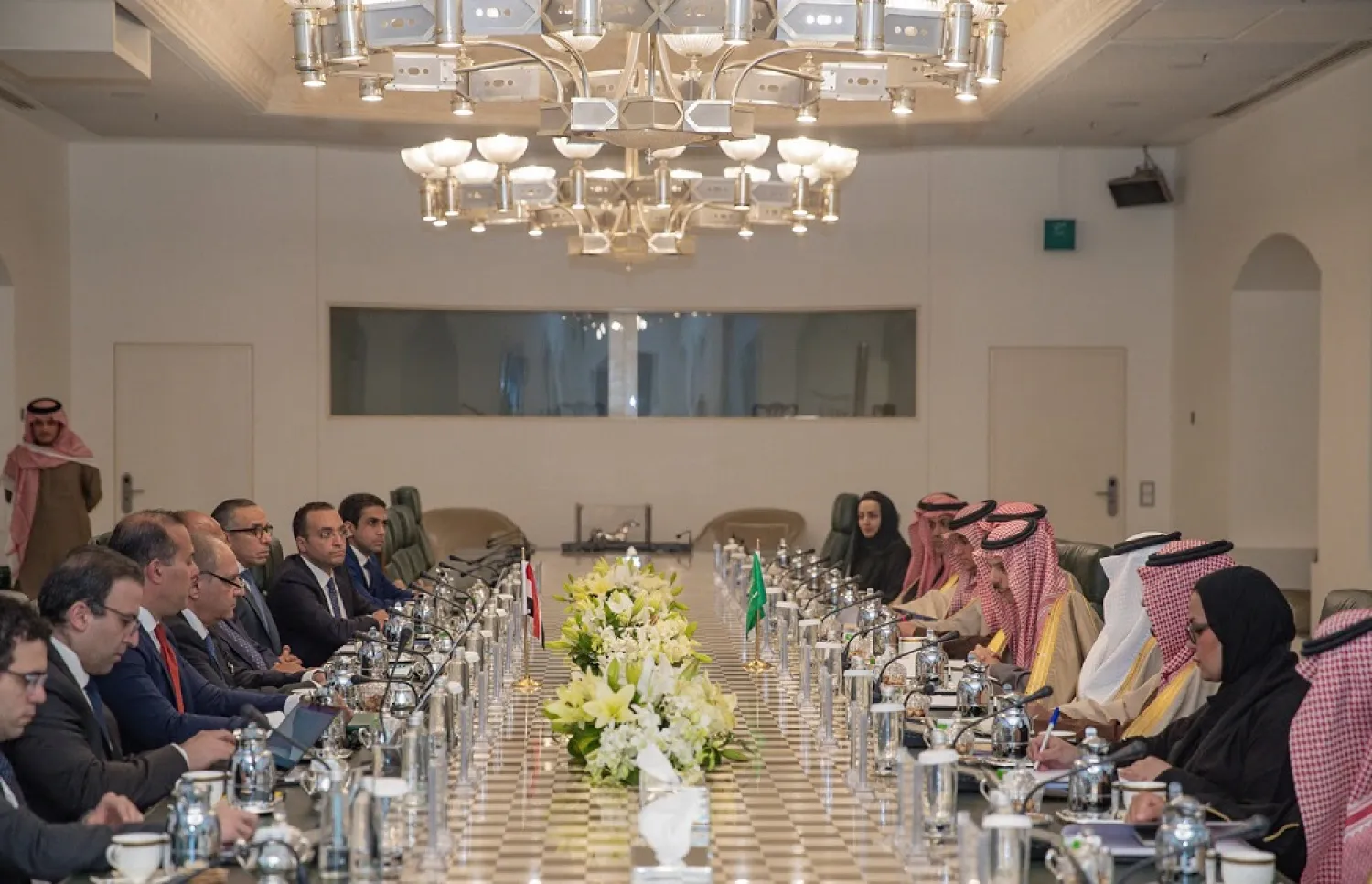

Saudi Foreign Minister Prince Faisal bin Farhan bin Abdullah and his Egyptian counterpart Sameh Shoukri chaired in Riyadh on Thursday the meeting of their joint follow-up and political consultation committee.
Both parties shared common views on several issues and regional and international crises, underscoring the depth of the strategic relations that bind their countries and their determination to achieve stability in the region.
They stressed the need to intensify cooperation in political areas and discuss ways to bolster coordination in fields of concern.
Prince Faisal had received at the Foreign Ministry Shoukry and his accompanying delegation for talks before holding a luncheon banquet in their honor.
Arab security
A joint statement following the committee meeting stressed that Arab security was indivisible, urging the need for collective Arab work and solidarity to preserve Arab national security.
This is a responsibility for each Arab country, it added, saying that Saudi Arabia and Egypt play leading roles in achieving political and economic stability in the region to reach sustainable development in all countries in the area.
They agreed on the importance of maintaining coordination to support the countries of the region and the security and stability of their people.
Rejecting meddling
Saudi Arabia and Egypt underlined their rejection of attempts by regional parties to meddle in the internal affairs of Arab countries.
They expressed their rejection of threats to their stability and the undermining of the interests of their peoples, whether through ethnic or sectarian incitement, acts of terrorism and terrorist groups, or expansionist visions that don’t respect the sovereignty of nations and good neighborliness.
They agreed to continue the fight against terrorist groups in the region.
The Arab cause
They stressed the centrality of the Palestinian cause, saying it was the top priority in the Arab world.
Saudi Arabia and Egypt said a just a comprehensive solution to the Palestinian-Israeli conflict lies in the establishment of an independent Palestinian state according to the 1967 borders with East Jerusalem as its capital.
The solution must be based on the 2002 Arab peace initiative and relevant international resolutions.
They stressed the importance of coordination in this field with regional and international powers that are concerned with the conflict.
Sudan
Saudi Arabia and Egypt welcomed the signing of the framework agreement in Sudan, hoping it would pave the way for meeting the ambitions of the Sudanese people.
They stressed the importance of supporting political and security stability in Sudan.
Sudan’s security and stability is indivisible to that of Saudi Arabia and Egypt, added the committee statement.
Nuclear-free region
Saudi Arabia and Egypt stressed the need for Iran to commit to the Treaty on the Non-Proliferation of Nuclear Weapons that would prevent it from acquiring nuclear arms.
They stressed the need for international efforts to meet this demand and ensure that Iran’s nuclear program is peaceful. They stressed the need to back Arab efforts to urge Iran to respect good neighborliness and refrain from meddling in Arab affairs.
Iran must refrain from carrying out acts that destabilize the entire region, including supporting armed militias and threatening international marine navigation and trade routes.
Saudi Arabia and Egypt agreed on the importance of bolstering the role of the International Atomic Energy Agency and back efforts to establish a Middle East that is free of nuclear arms and weapons of mass destruction.
Yemen
Both parties expressed full support to United Nations and international efforts aimed at extending the nationwide truce in Yemen to eventually reach a comprehensive political solution according to the Gulf initiative, national dialogue outcomes and UN Security Council resolution 2216.
Egypt lauded Saudi Arabia’s efforts and several initiatives that were aimed at encouraging dialogue between Yemeni parties and extending the truce that was part of the Kingdom’s initiative that was unveiled in March 2021.
It praised Riyadh for its role in facilitating and delivering humanitarian aid to Yemen and providing economic support and development projects there.
Saudi Arabia and Egypt expressed their deep concern over the Iran-backed Houthi terrorist militias’ ongoing attacks against international marine routes that are negatively impacting global energy supplies.
They stressed their support for the Yemeni Presidential Leadership Council and its efforts to achieve stability and meet the aspirations of the people.
Libya
Saudi Arabia and Egypt underscored their support for a UN-sponsored Libyan solution to the North African nation’s crisis.
They urged an end to foreign interference in Libyan affairs and rejected foreign dictates on Libyans.
They hailed the role of the east-based parliament and High Council of State in meeting the conditions that would allow Libya to forge ahead towards a better future.
They also praised the agreement between the parliament and High Council of State on referring the constitutional document to their respective bodies for approval.
Riyadh and Cairo stressed the need to complete the related measures, including the approval of electoral laws and executive measures and unifying institutions, that would pave the way for holding presidential and parliamentary election as soon as possible.
Saudi Arabia also praised Egypt for hosting the rounds of Libyan constitutional dialogue in coordination with the UN.
Moreover, Saudi Arabia and Egypt demanded the withdrawal of foreign forces, mercenaries and fighters from the whole of Libya within a specified timeframe.
They called for the disbanding of militias and the implementation of relevant Security Council resolutions and the decisions reached at the Berlin and Paris conferences that will help restore stability, sovereignty and security in Libya and its territorial integrity.


